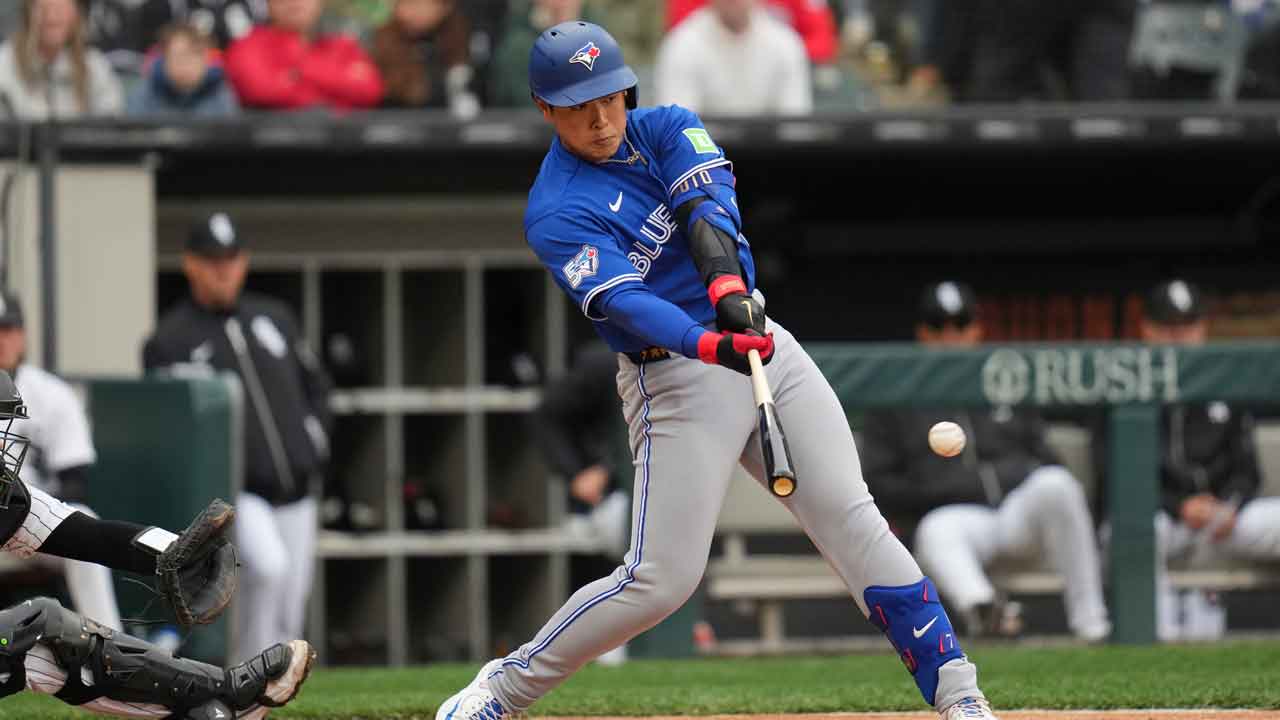
MILWAUKEE, Wisc. — Sometimes, Kazuma Okamoto peers from the window of his downtown Toronto condominium and wonders if he ever left home.
“The city is beautiful,” the Toronto Blue Jays third baseman says through club interpreter Yusuke Oshima. “I look out and just think, ‘Am I in Japan?’ Because Toronto gives off a Tokyo vibe.”
Yet Okamoto, hardly a fiscal quarter into the four-year, $60-million deal he signed with the Blue Jays in January, quickly snaps out of it. The reminders of how different his life is now from only a few months ago are everywhere.
New language, new customs, new teammates. A less tacky, smaller-seamed MLB baseball that still feels unusual in his hand from the NPB ones he played with over the first eight seasons of his career. Every road trip takes him to a new American city and ballpark he’s never played in before. With each visiting clubhouse, new food to sample.
“Yeah, I really like sandwiches and quesadillas,” he says, as If referring to extravagant and rare delicacies. “Off the field, everything’s a little bit different.”
And then there’s the game itself. Following an auspicious start with five hits (including two homers) and three walks through his first four MLB games, Okamoto has fallen into a funk over the subsequent 13, going 8-for-50 with one extra-base hit. Perhaps most unusual is that the 29-year-old — a bat-to-ball and on-base merchant throughout his Japanese career — is striking out in a third of his plate appearances.
Lessons are being learned in the field, too. Okamoto was last an everyday third baseman in 2022. And in his return to regular reps at the position, he’s shown why the Yomiuri Giants played him mostly at first in recent seasons. He committed a pair of errors in Toronto’s series against the Los Angeles Dodgers earlier this month and made some plays look tougher than they needed to be with an incorrect read of a bounce or inaccurate clock on a baserunner.
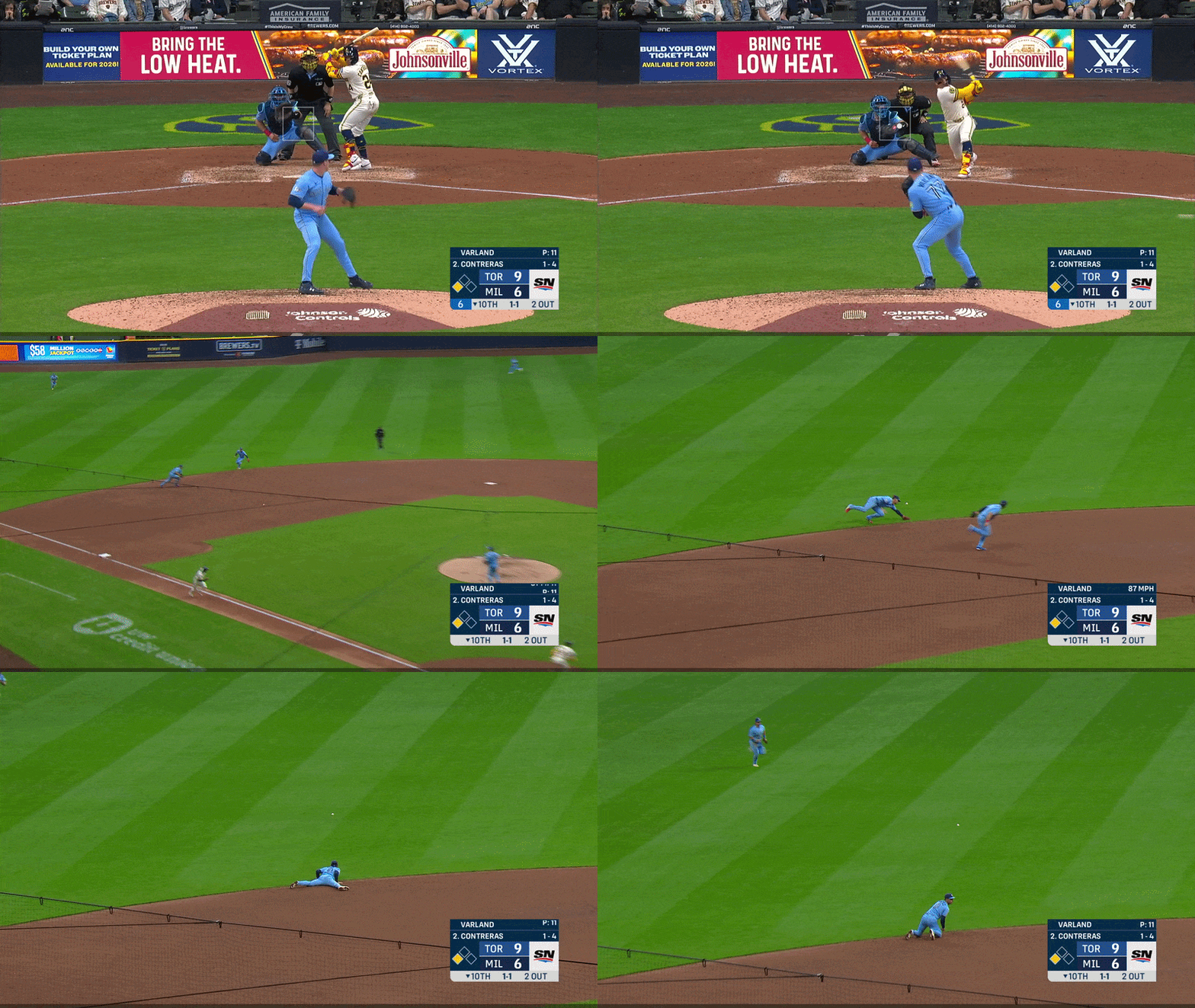
Take the bottom of the 10th inning on Tuesday, as Louis Varland was trying to close the door on a Blue Jays comeback victory. William Contreras hit a weak groundball to short that could have ended the game. But Okamoto ranged too far to his left, cutting off shortstop Andres Gimenez and deflecting the ball, which ended up in left field as a run scored. Varland needed to throw seven more pitches for his third out.
Of course, these transitional challenges were expected. When the Blue Jays signed Okamoto, they anticipated an adjustment period as he acclimatized to a new style of play, unfamiliar opponents, and different playing surfaces than he was accustomed to in Japan. To say nothing of the premium velocity and supercharged pitch movement hitters see far more frequently in MLB than they do in NPB.
But that doesn’t make it any easier for a player with a new team who desperately wants to contribute.
“To be honest, I want to hit more,” Okamoto says. “But over a long course of the season, I know there’s going to be ups and downs. That’s no different from when I was playing in Japan, too. So, I think it’s just a little lull right now. And, hopefully, I can get it going soon.”
It’s a fraught exercise to dive too deep into 17 games’ worth of plate appearances, but even over this miniscule sample, trends have emerged. Clubs began the season challenging Okamoto with velocity. Over his first seven games, Okamoto saw a fastball 56 per cent of the time. But over his 10 games since, Okamoto has been spammed with curveballs and sliders. Since the beginning of the month, 40 per cent of the pitches Okamoto has seen have been breaking balls — the second-highest rate on the Blue Jays.
That makes intuitive sense. Okamoto didn’t face premium, MLB-level heat regularly over his last eight years in NPB. In the early going, the league forced him to prove he can catch up to it. And once he did — eight of Okamoto’s first nine hits came off fastballs — pitchers adjusted to see how well he can recognize spin.
That’s been more difficult. Okamoto entered this week’s series in Milwaukee with only one hit off a breaking ball this season — an opening-day flare to shallow left-centre for his first MLB base hit — plus a team-high 50 per cent whiff rate against curveballs and sliders. A heat map of where all those breaking pitches have been located tells its own story:
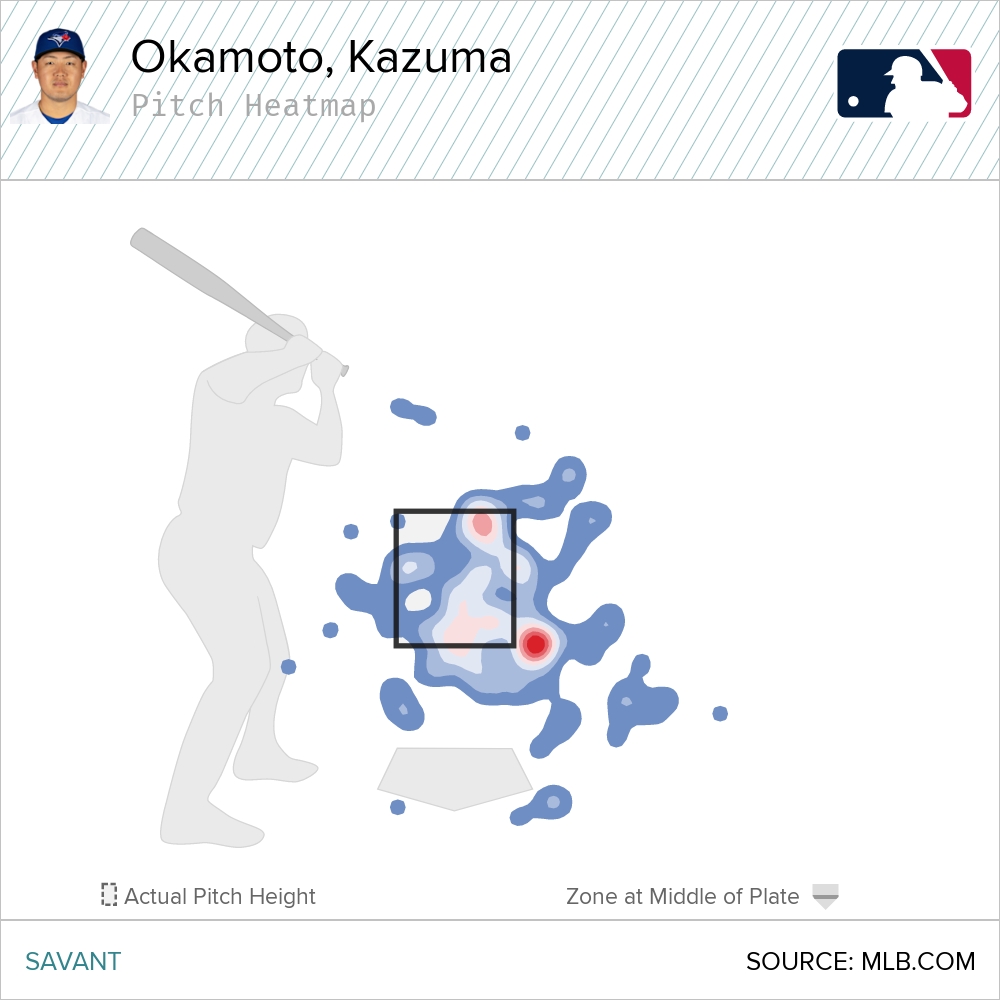
Okamoto’s strength over his NPB career was pulling pitches in the air for power while utilizing enough selectivity to run double-digit walk rates and making enough contact around the zone to minimize strikeouts. Think Isaac Paredes. A pitcher’s obvious counter to that is living down-and-away with spin. Locate effectively enough to generate a swing and out-front hitters such as Okamoto or Paredes are likely to create weak contact off the end of their bats or whiff entirely.
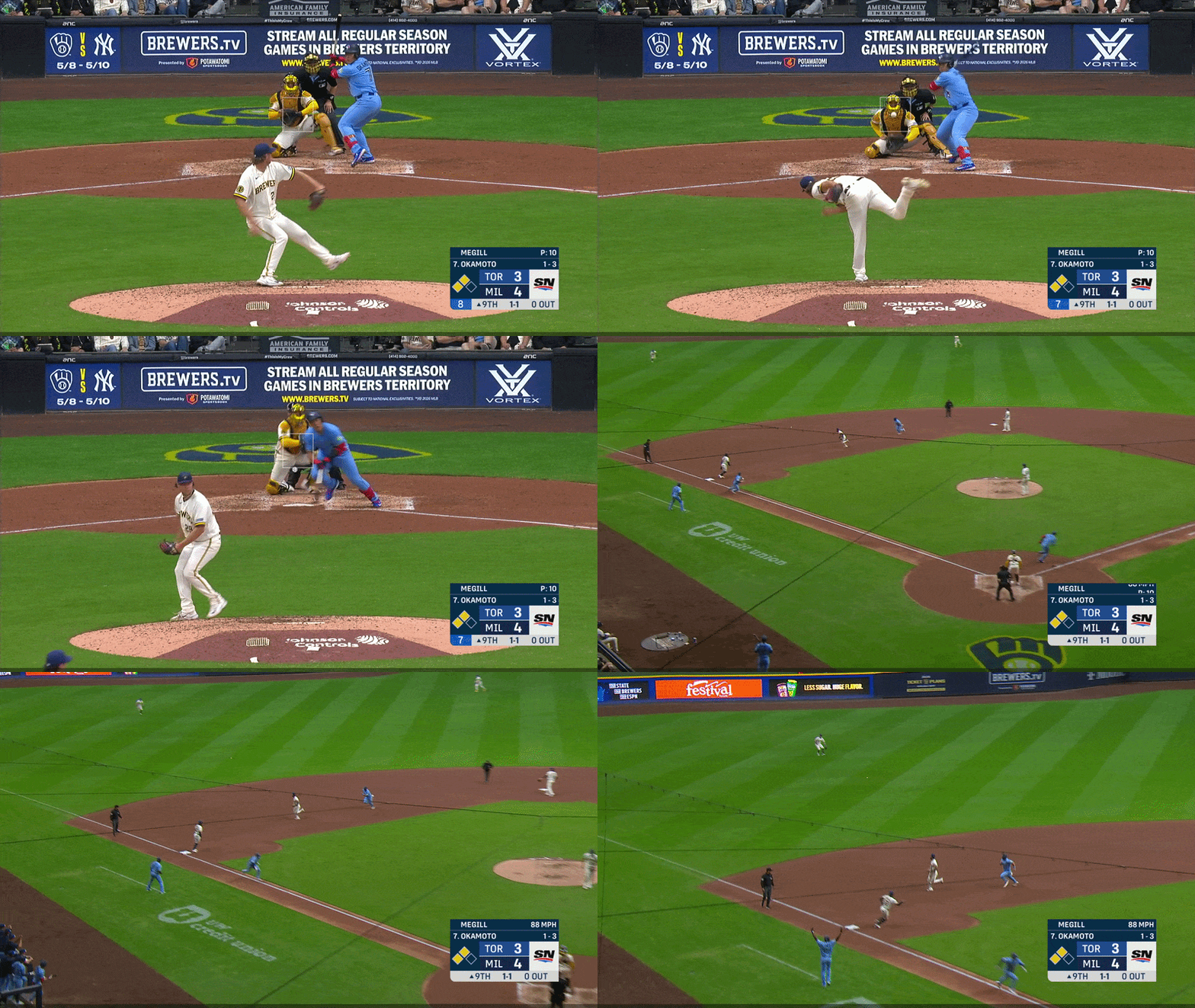
But Okamoto showed encouraging signs of adjusting back late in Tuesday’s wacky, roller-coaster victory over the Brewers. In a 1-1 count against Angel Zerpa in the seventh, Okamoto anticipated a slider away, stayed on it, and sent a groundball single back up the middle. Then, against Trevor Megill in the ninth, he looked at a couple of curveballs beneath the zone before seeing one high enough to chop through the left side of a drawn-in infield and tie a game.
Okamoto saw a team-high 19 breaking balls during that Brewers series — 10 of them outside the strike zone. But he chased only two of those pitches. And when Brandon Sproat missed over the plate with an 0-2 sweeper in Thursday’s second inning, Okamoto pounced and drove it 379 feet to right-centre. Milwaukee’s American Family Field held it. But it would have been a home run at half of MLB’s 30 ballparks, including Rogers Centre.
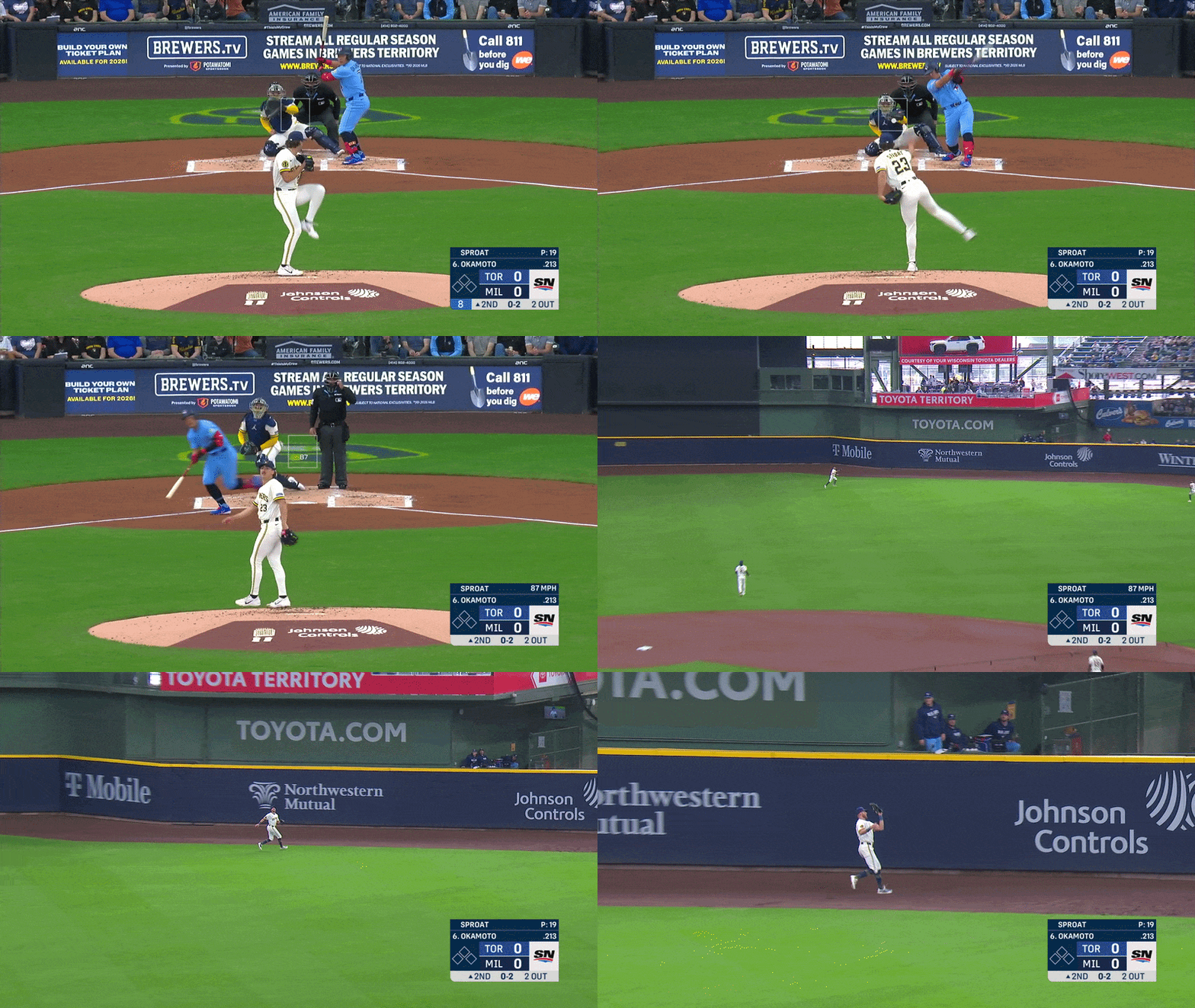
“Every day before and after games, I review and make little tweaks when I’m doing cage work. Making sure that I can get adjusted as soon as possible so I can contribute,” Okamoto says. “The opposition, they’re always studying. And I’m studying, as well. So, I have a good idea of how teams have been approaching me. I just have to make adjustments based on in-game stuff and read how pitchers attack.”
Defensively, the Blue Jays have been positioning Okamoto deeper on the infield dirt to give him as much time as possible to make reads on balls that come off bats consistently harder in North America than they do in Japan. Watch him throughout a ballgame and you’ll constantly see Okamoto peering into the Blue Jays dugout, looking for infield coach Carlos Febles who will move him left, right, in, or back if necessary.
Okamoto says a big pre-game focus as he tours around MLB is getting a read for how balls bounce off various playing surfaces. The good news is that he’s accustomed to playing on artificial turf beneath a roof at Tokyo Dome, which he called home with the Giants. But whenever he heads on the road, he’s encountering grass surfaces — more than half of NPB’s stadiums feature turf — while dealing with atmospheric elements in open-air environments.
“Every day I’m practicing, getting my feet wet, taking lots of reps,” he says. “The positioning itself is a little bit of a work in progress. But I think once I get used to it, it will become second nature.”
These may all seem like minor, unremarkable adjustments, but they add up. There are only so many pre-game hours to work with, and energy must be conserved so that Okamoto can compete at his best on a nightly basis. But with each game, circumstances will feel a bit less foreign than the one prior. And as the unfamiliarity diminishes over the coming days, weeks, and months, the version of Okamoto the Blue Jays envisioned should come more into focus.
“I’m looking forward to each and every day. That’s why I came over here,” Okamoto says. “With being in the lineup every day, I feel a responsibility. I want to contribute to this team and be able to hit. So, I’ve just got to be prepared every game.”